The Connection Between Birth Trauma and a Dysregulated Nervous System

If you've felt anxious, on edge, or just not yourself since giving birth — your nervous system might have something to say about that. Here's what birth trauma really does to your body.
Can we talk about something that doesn't get nearly enough airtime? Birth is one of the most physically and emotionally intense experiences a human body can go through — and for a lot of moms, it doesn't go the way they imagined. Whether your birth was medically traumatic, emotionally overwhelming, or just really really hard, your nervous system felt every single second of it.
What does a dysregulated nervous system even mean?
Your nervous system is essentially your body's alarm system.When it detects threat or danger, it kicks into fight-or-flight mode — heart racing, muscles tense, breath shallow. Normally, once the threat passes, it comes back down to baseline. But sometimes — especially after something as overwhelming as birth — it gets stuck. It keeps signaling danger even when you're safe at home with your baby. And that's exhausting in a way that's really hard to explain to someone who hasn't felt it.
Signs your nervous system is still in survival mode
Feeling anxious or on edge even when everything is "fine"
Trouble relaxing or sleeping even when baby sleeps
Feeling emotionally numb or disconnected from your baby or yourself
Hypervigilance — feeling like you have to monitor everything all the time
Physical symptoms like tension headaches, jaw clenching, tight hips or shoulders
Feeling wired but exhausted — all the time
Sound familiar? This is not anxiety disorder. This is not you being dramatic. This is a nervous system that went through something enormous and hasn't fully processed it yet.
How birth trauma lives in the body
Here's the thing that blew my mind when I started learning about this — trauma isn't just a memory in your head. It lives in your tissues. Your pelvic floor, your diaphragm, your jaw, your hips. These are all places the body holds tension when it's been through something scary or overwhelming. Which is why talking about it doesn't always fix it. The body needs its own kind of processing.
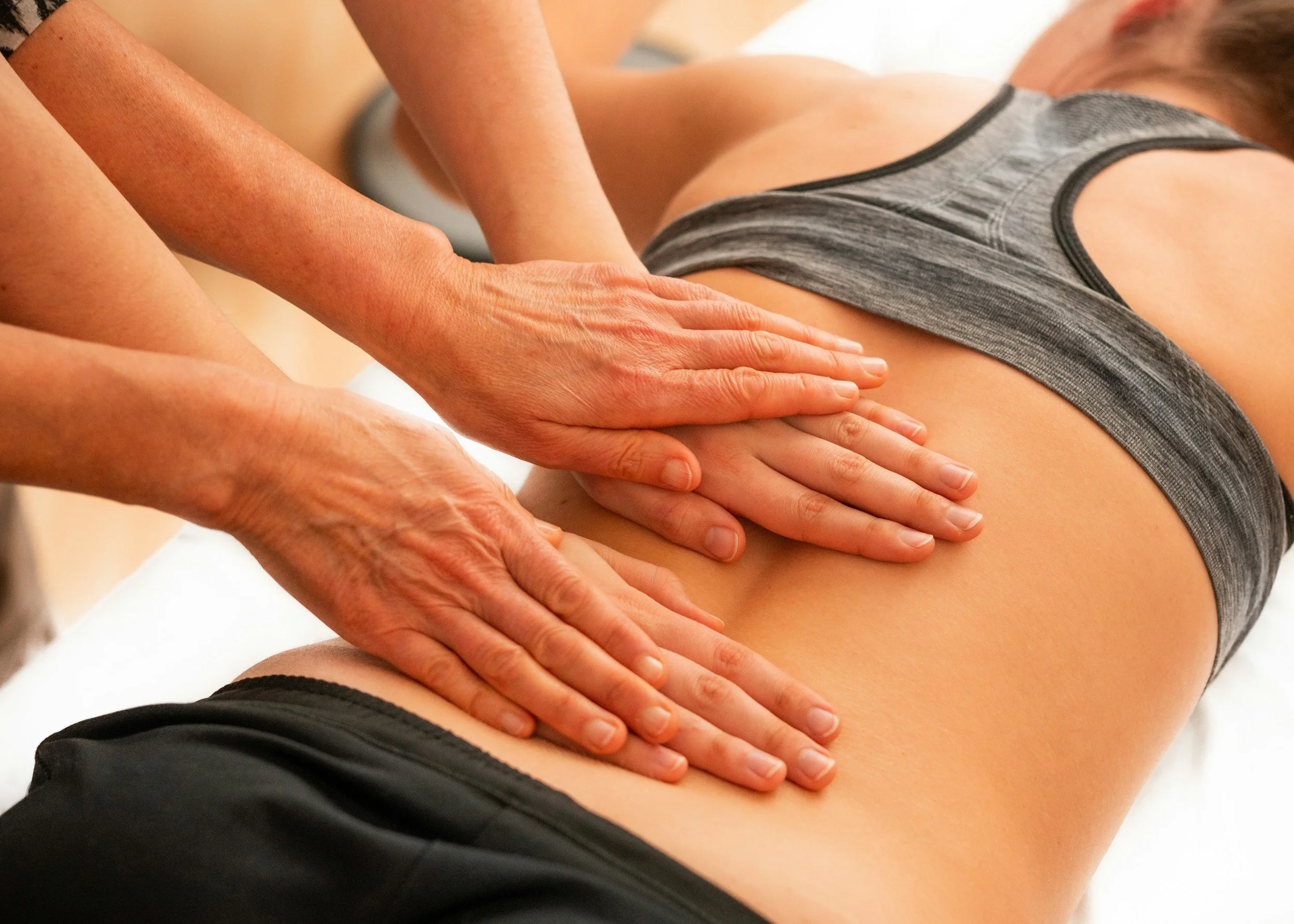
Where Craniosacral t
herapy comes in
Craniosacral therapy works directly with the nervous system — gently, non-invasively. It helps the body shift out of that stuck fight-or-flight state and back into a place where it feels safe enough to rest and heal. A lot of my postpartum clients come in for pelvic floor issues and leave saying their whole system feels calmer. That's not a coincidence. When the nervous system finally gets to exhale, everything else starts to fall into place.
You deserve more than "you have a healthy baby, that's what matters"
Your birth experience matters. How you felt matters. How you feel right now matters.
If you're in the Tampa area and your body still doesn't feel like your own since you gave birth — physically or emotionally — let's talk. Healing after birth is so much more than a 6-week checkup. We would love to work with you and help you heal<3