How to Choose a Prenatal That Goes Beyond Minimum Standards

When I first became pregnant, I came across a book, The Postnatal Depletion Cure, that shifted my perspective on the level of support that women *actually* require postpartum. The book highlighted the level of depletion that occurs at a cellular level in mothers, not only the energetic and emotional components that first come to mind when tasked with caring for a newborn.
Mineral depletion, macro and micronutritent deficits, coupled with broken sleep, increased stress and the emotional cluster of the question ”Who am I?” that motherhood slaps you with, which feels like one of those dreams where a dump truck is barreling at you and your legs don’t work to jump out of the way.
Early in my first pregnancy I started to do a ton of research on prenatals and this book sparked my attention to detail for all the ingredients in the leading and “recommended” prenatals. I was comparing all the ingredients, researched what medical professionals were recommending, and delved a little deeper into asking, Why? Why are these the recommendations and where do they even come from?
I’m not someone who takes things at face value. I like to ask questions, understand how and why a recommendation even came into place, if the circumstances still apply to our current daily diet, activities, lifestyle, culture and lives.
Choosing a prenatal vitamin can feel like one of the most important decisions you’ll make before and during pregnancy — yet most women are unknowingly undernourished even while “doing everything right.”
How is that even possible?!
Because most prenatal vitamins are formulated to meet outdated Recommended Dietary Allowances (RDAs), not the real-world nutritional demands of modern women, pregnancy, and postpartum recovery.

Let’s talk about why that matters — and why I landed on Needed’s Prenatal Multi as my personal prenatal of choice.
Nutrient Depletion in Women
During pregnancy, your body is responsible for so many things. Here are just a few:
Building a placenta
Expanding blood volume
Growing an entirely new human (including brain, nervous system, and organs), FROM SCRATCH
Supporting hormonal shifts
Protecting maternal nutrient stores
Phew that’s A LOT going on behind the scenes.
If nutrient intake isn’t sufficient, the baby will still get what it needs — but at the expense of the mother.
This is why so many women experience:
Occasional fatigue and brain fog
Hair loss postpartum
Thyroid shifts
Mood changes
Mineral depletion
Slow recovery after birth
AKA DEPLETION!
So many women are undernourished during critical life stages, and current data suggests up to 95% of women experience nutritional depletion, despite taking a prenatal vitamin.
A prenatal should protect both mom and baby — not just check a box. National Health Data (NHANES) shows even women taking a supplement are often deficient in key nutrients, including vitamins D, A, B6, K and E, along with choline, calcium, magnesium, iron and zinc. These aren’t just nutrients that are an added bonus, they are essential for processes like hormone production, baby’s brain and development, and regulating blood pressure just to name a few.
The Problem with RDAs
The Recommended Dietary Allowances (RDAs) were created to prevent deficiency-related diseases — not to optimize fertility, support hormone health, or nourish both mom and baby at a cellular level.
In other words:
RDAs aim for “not deficient”
Pregnancy requires “deeply nourished”
RDAs also:
Don’t account for nutrient-depleted soils
Excluded pregnant and breastfeeding mothers from 83% of studies informing RDAs
Don’t factor in stress, lack of sleep, or modern lifestyles
Are based largely on data from non-pregnant populations
Often reflect the minimum amount needed to avoid illness — not thrive
For pregnancy, this gap matters immensely.
Why Needed’s Prenatal Multi Essentials Hits Different

Needed’s Prenatal Multi was created by clinicians, dietitians, and maternal health experts who understand that pregnancy nutrition requires more than outdated standards.
Here’s how it stands out:
1. Optimal Doses — Not just RDA Minimums
Needed formulates their prenatal based on evidence-based optimal ranges, not just RDAs. That means nutrients are included at levels shown to:
Support fertility and implantation
Reduce the risk of depletion
Nourish maternal tissues
Support fetal development more effectively
This is especially important for nutrients like:
Choline
Magnesium
Iodine
Vitamin D
B vitamins (including methylated forms)
Most prenatals underdose or omit these entirely.
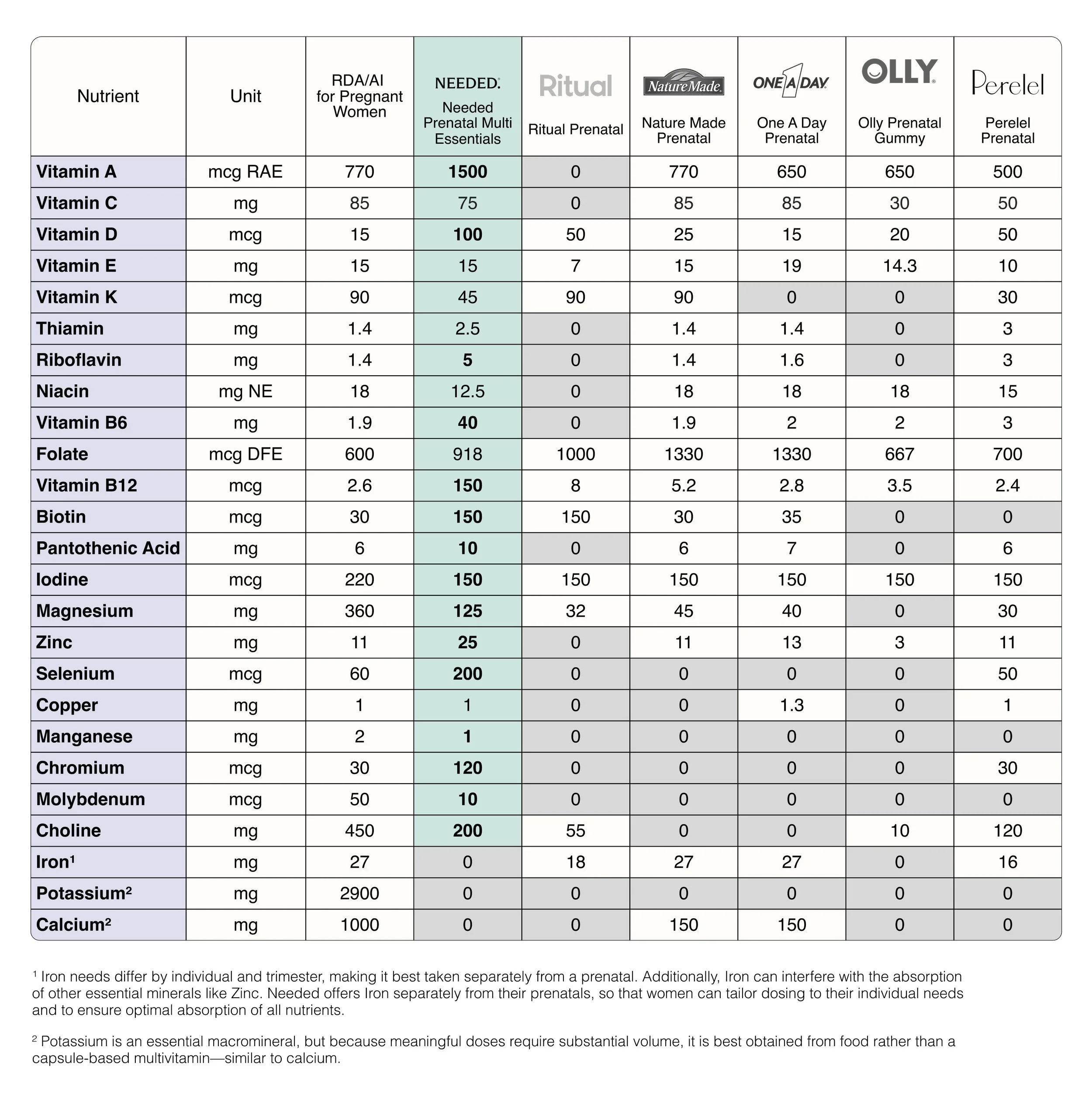
Needed Prenatal Multi Essentials provided 5x more nutrition than outdated RDAs and 8x more nutrition than leading prenatals.*
2. Highly Bioavailable Forms
Quantity matters — but absorption matters just as much.
Needed uses forms your body can actually use, such as:
Methylated B vitamins
Chelated minerals
Thoughtfully sourced ingredients with minimal fillers
Every batch is third party tested
This ensures nutrients are delivered where they’re needed most.
3. Designed for the Whole Journey
Needed’s Prenatal Multi Essentials is suitable for preconception, pregnancy, postpartum, and breastfeeding.
This continuity supports long-term maternal health and considers the full continiuum— not just nine months of survival.
I love that I can trust a product that considers this, and can take some mental load off my plate by not having to find a new supplement for my postpartum or breastfeeding season. It’s almost as if…, a woman thought of this?! Lol.
If you’re investing in prenatal care, birth planning, and postpartum support — your prenatal vitamin should meet that same standard.

Thriving through pregnancy isn’t about meeting minimums-it’s about giving your body what it truly needs.
This post is sponsored by Needed, a brand I genuinely recommend to my patients and use personally.
These statements have not been evaluated by the Food and Drug Administration. This product is not intended to diagnose, treat, cure, or prevent any disease.
*Based on the total daily dosage of nutrients provided compared to leading prenatals as determined by IRI sales data as of December, 2025.